
As social media and AI technology continue to develop rapidly, school violence no longer exists only in classrooms or schoolyards—it can also appear in cyberspace in increasingly sophisticated forms. From false posts, edited images, and defamatory content to the spread of unverified information, every action that may seem like “just a harmless post for fun” can leave serious consequences for others.
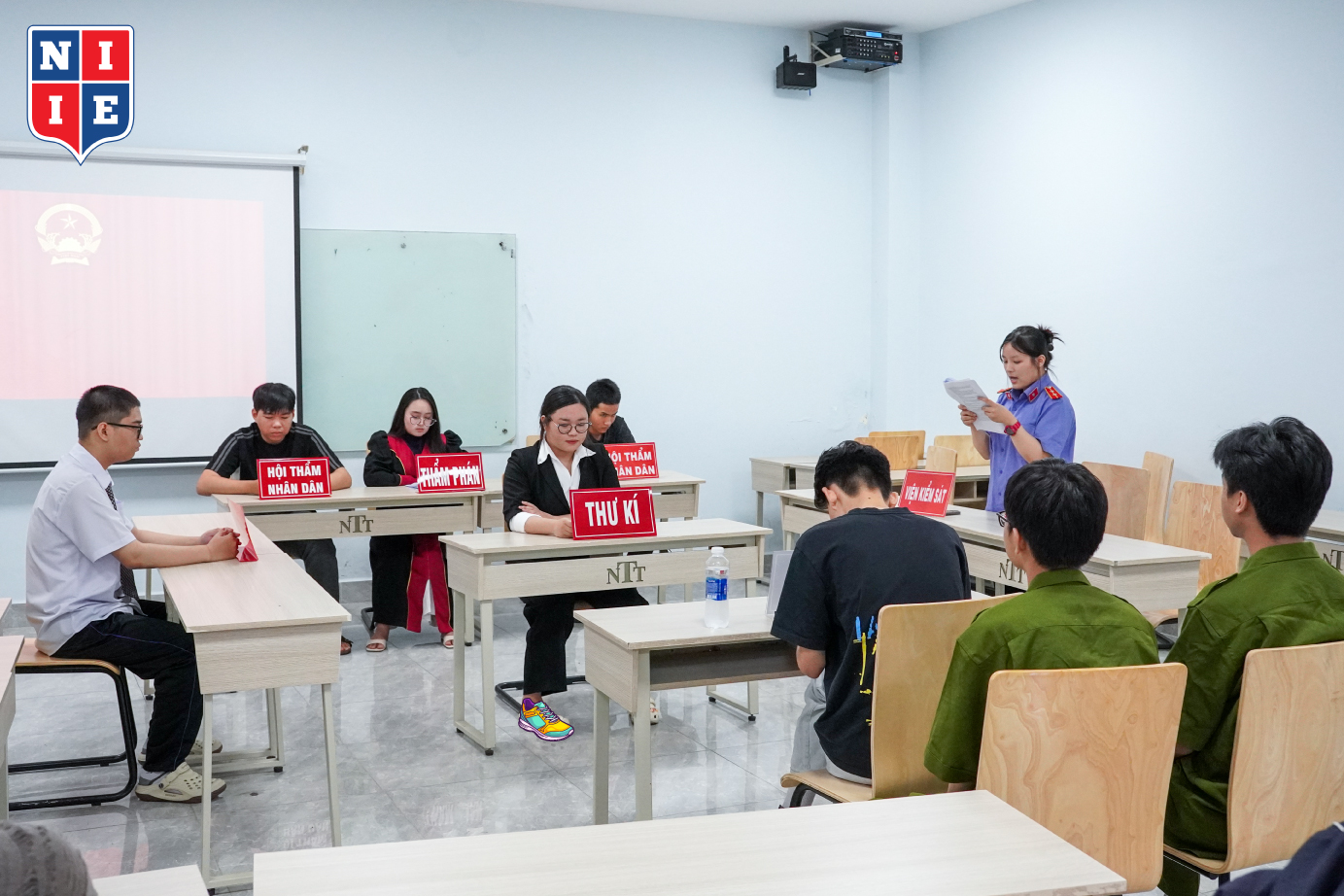
With the goal of helping students approach legal knowledge in a more practical and relatable way, students in the Legal Logic course of the Economic Law program at NIIE Institute – NTTU participated in a mock trial themed “Cyberbullying in School Environments.” The activity recreated a criminal case involving the use of social media and AI technology to create and spread false content that violated the dignity and honor of another student.
In the mock trial, the case revolved around Defendant A—a student who, driven by personal jealousy, used AI technology to generate false content and spread it on social media to seriously damage a classmate’s reputation. This behavior not only caused emotional harm to the victim but also raised important concerns regarding cyberbullying in today’s educational environment.
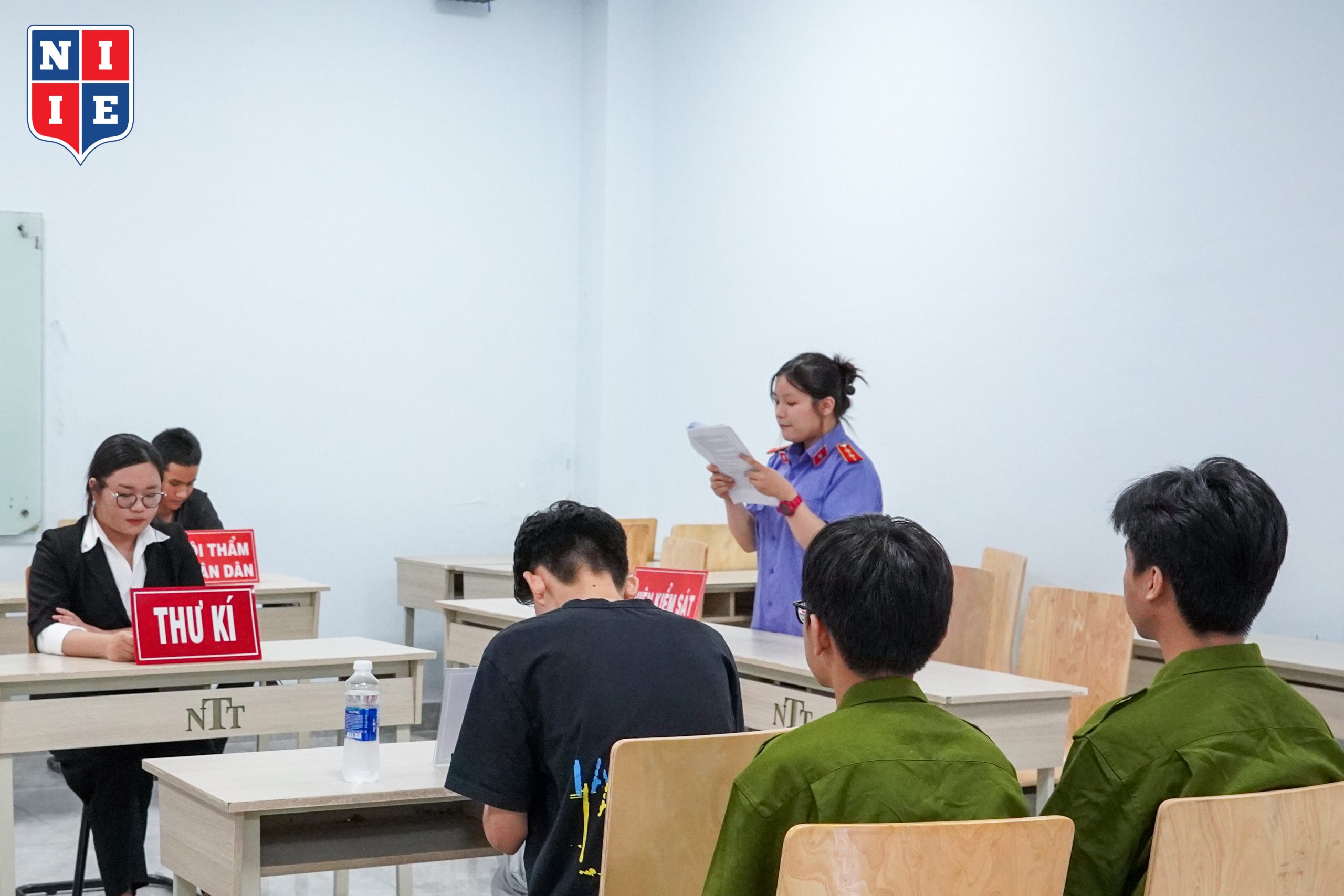
A notable aspect of the activity was that students did not simply observe a legal scenario—they actively played courtroom roles such as members of the trial panel, prosecutors, defense lawyers, defendants, victims, and other litigation participants. Through questioning, debating, and presenting legal arguments, students gained a deeper understanding of how a real trial operates, from procedural processes to evaluating evidence and building legal reasoning.
To adjudicate the case, students applied important legal documents such as the 2015 Criminal Code, amended and supplemented in 2017; the 2015 Criminal Procedure Code, amended and supplemented in 2021, 2024, and 2025; and the 2015 Civil Code. Applying legal provisions to a specific case helped students clearly understand the relationship between actions, legal elements, evidence, and conclusions. This also transformed legal knowledge from textbook theory into practical tools for analyzing and solving real-world problems.
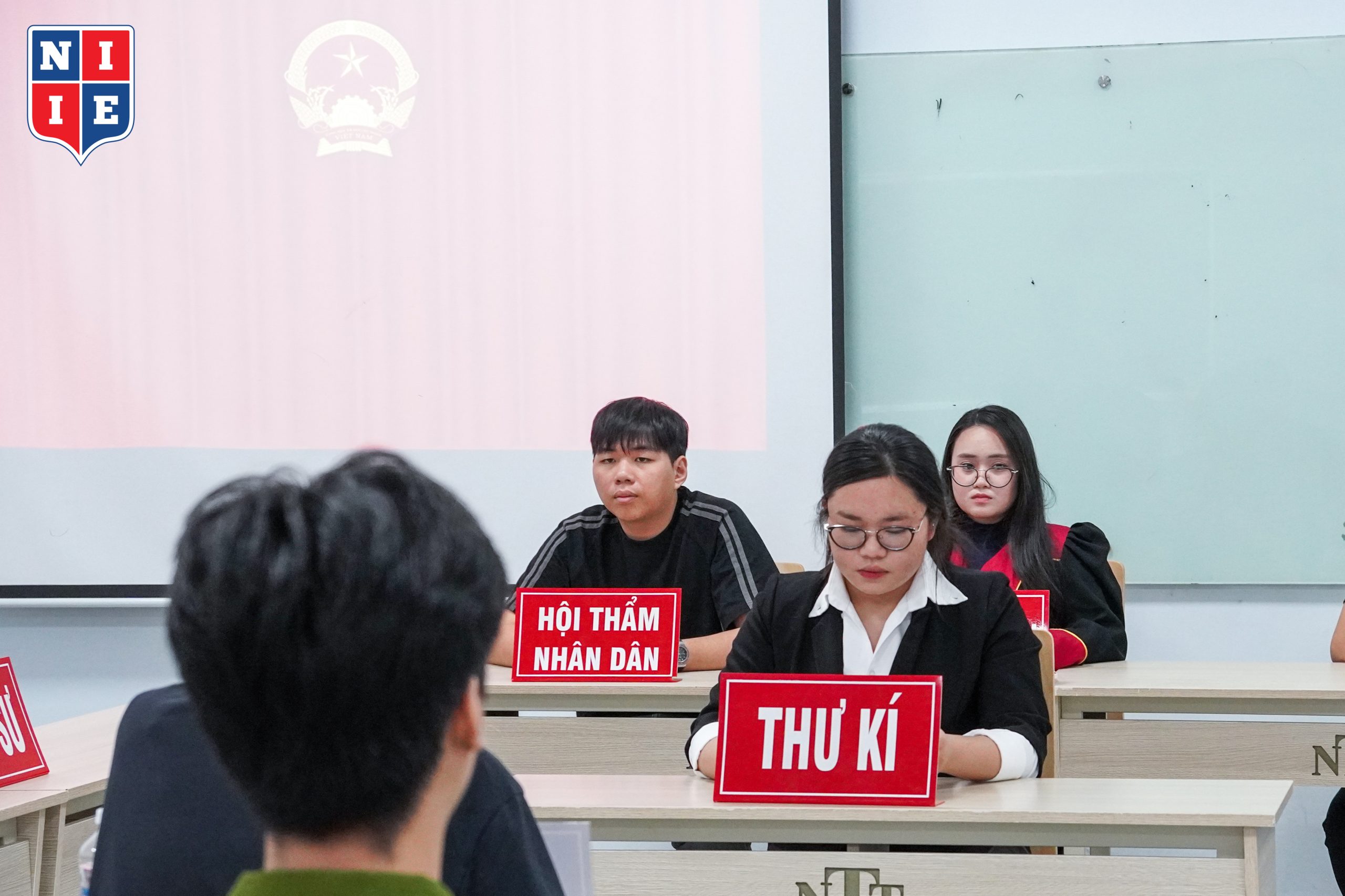
Through the mock trial, students experienced law in a more “hands-on” and practical way. Instead of merely memorizing legal articles, they were placed in situations involving concrete contexts, characters, motives, and consequences. As a result, students gained a clearer understanding of the essence of legal application: not only knowing which law applies, but also understanding why that law is appropriate, what evidence is sufficient, and which arguments are truly persuasive.
Beyond professional knowledge, the activity also helped students develop many important soft skills essential for Law students. These included communication and professional expression, debating and critical thinking skills, case analysis, logical reasoning, teamwork, problem-solving, and adaptability during unexpected developments in litigation. These are all necessary competencies for students’ future academic and professional journeys.
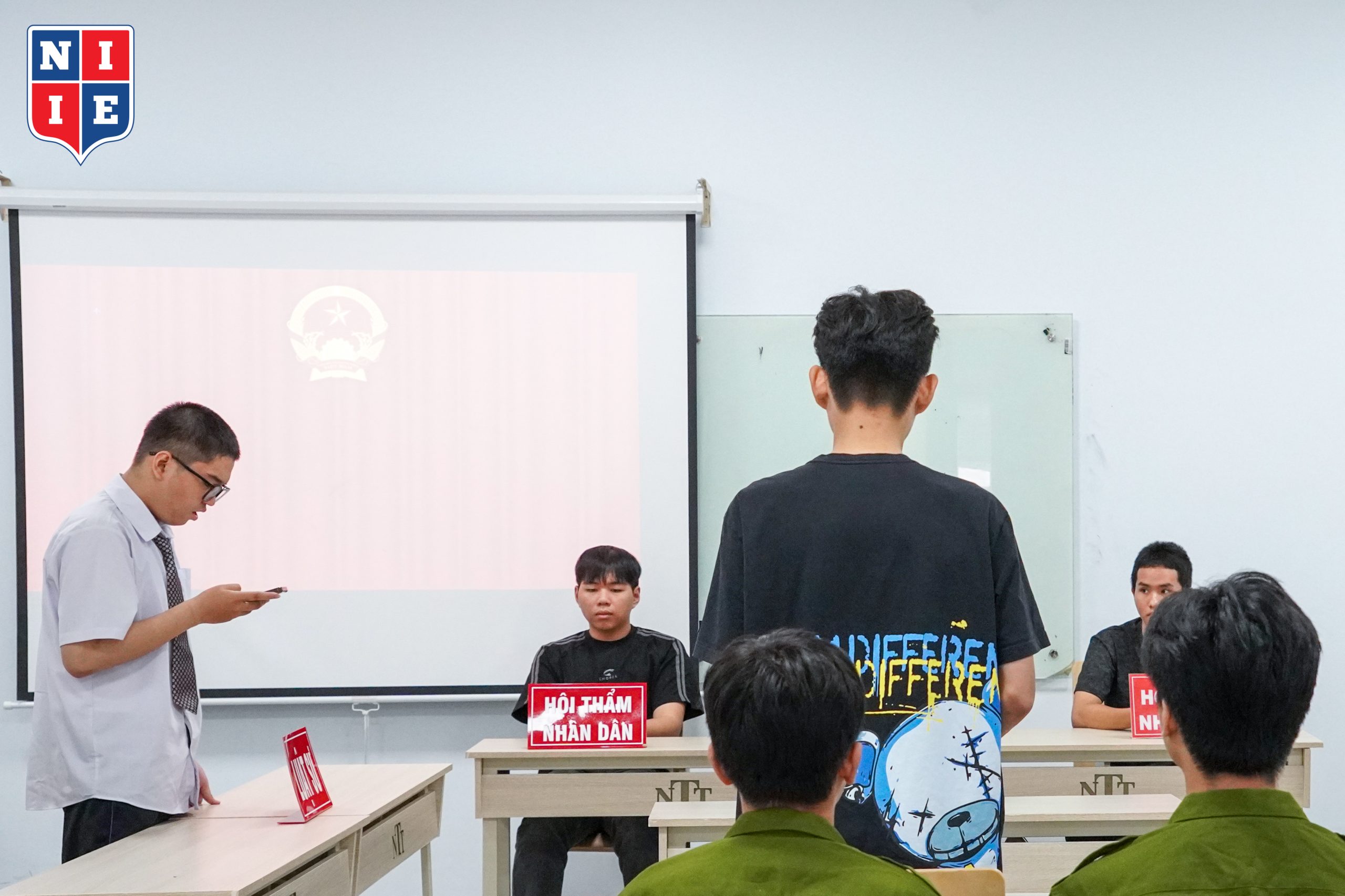
The mock trial also carried significant educational and humanitarian value beyond legal knowledge. By stepping into the roles of defendants, victims, and related parties, students were able to deeply realize that every action in cyberspace can create real-life consequences. A single statement, image, or misleading piece of content, once spread online, can cause psychological harm, damage reputations, and leave long-lasting impacts on victims.
In particular, the case scenario also helped students better understand the balance between law and education, especially when the offender is a minor. The law does not only focus on handling wrongful acts but also emphasizes education—helping offenders recognize consequences, correct mistakes, and have opportunities to change. This is one of the important humanitarian values of the legal system.
From an academic perspective, the mock trial helped students vividly connect legal theory with real-world practice. From a social perspective, the activity raised awareness about responsibility in using social media, especially in an era where AI can create and spread content faster than ever before. From a professional perspective, it gave Law students a clearer understanding of their future working environment and helped them gradually develop a professional legal mindset.
It can be said that the mock trial “Cyberbullying in School Environments” was not only an academic activity, but also a meaningful practical experience for NIIE students. Through this activity, students not only gained a deeper understanding of the law but also learned to approach issues with awareness, responsibility, and humanity—qualities that are especially important for law students in today’s digital society.