To help students connect Microeconomics theory with real-world applications, the NTT Institute of International Education (NIIE) organized the workshop “Microfinance Through the Lens of the Stock Market”, offering an opportunity to explore how to analyze the economy, assess industries, and evaluate businesses using modern financial perspectives.

The speaker for the workshop was Mr. Le Minh Hai, Co-founder & CEO of Xanh Securities Investment & Trading Company, who has many years of experience in investment, portfolio management, and financial strategy consulting. With his relatable and easy-to-understand delivery, Mr. Hai helped NIIE students approach complex economic concepts in a more practical and intuitive way.
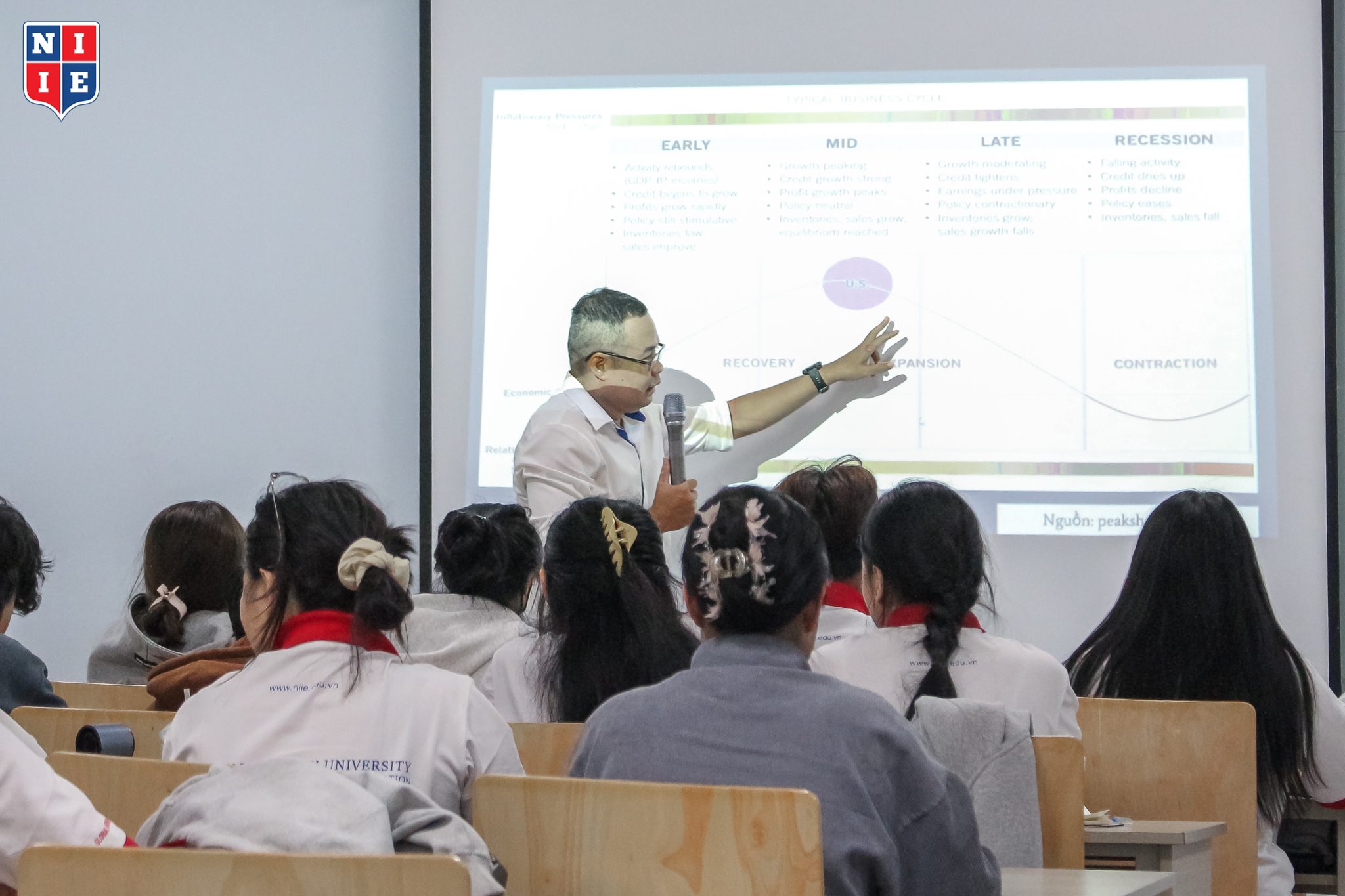
At the beginning of the session, the speaker systemized core concepts about how an economy operates—including production, distribution, and consumption—before leading students into the economic cycle model, a repeated pattern of growth and decline over time. From here, students learned that the stock market not only reflects investor behavior but also serves as a “mirror” of overall economic health.
Continuing the discussion, Mr. Hai introduced the financial market, including stocks, bonds, and other common investment channels. Through simple yet accurate explanations, students gained an understanding of the market’s role in capital mobilization, resource allocation, and liquidity creation for businesses.

One of the most important sections of the workshop was the industry analysis process. The speaker explained how an industry can expand or decline depending on the economic cycle, market demand, supply–demand dynamics, competition, and consumer trends. This forms the foundation for students to determine whether an industry is promising before diving deeper into a specific business analysis.
In the business analysis section, Mr. Hai guided students through reading financial statements and identifying a healthy company through indicators such as profit, profit margin, liquidity, and efficiency in capital utilization. This content also helped students directly connect microeconomic knowledge—firm behavior and market structure—with real financial operations.
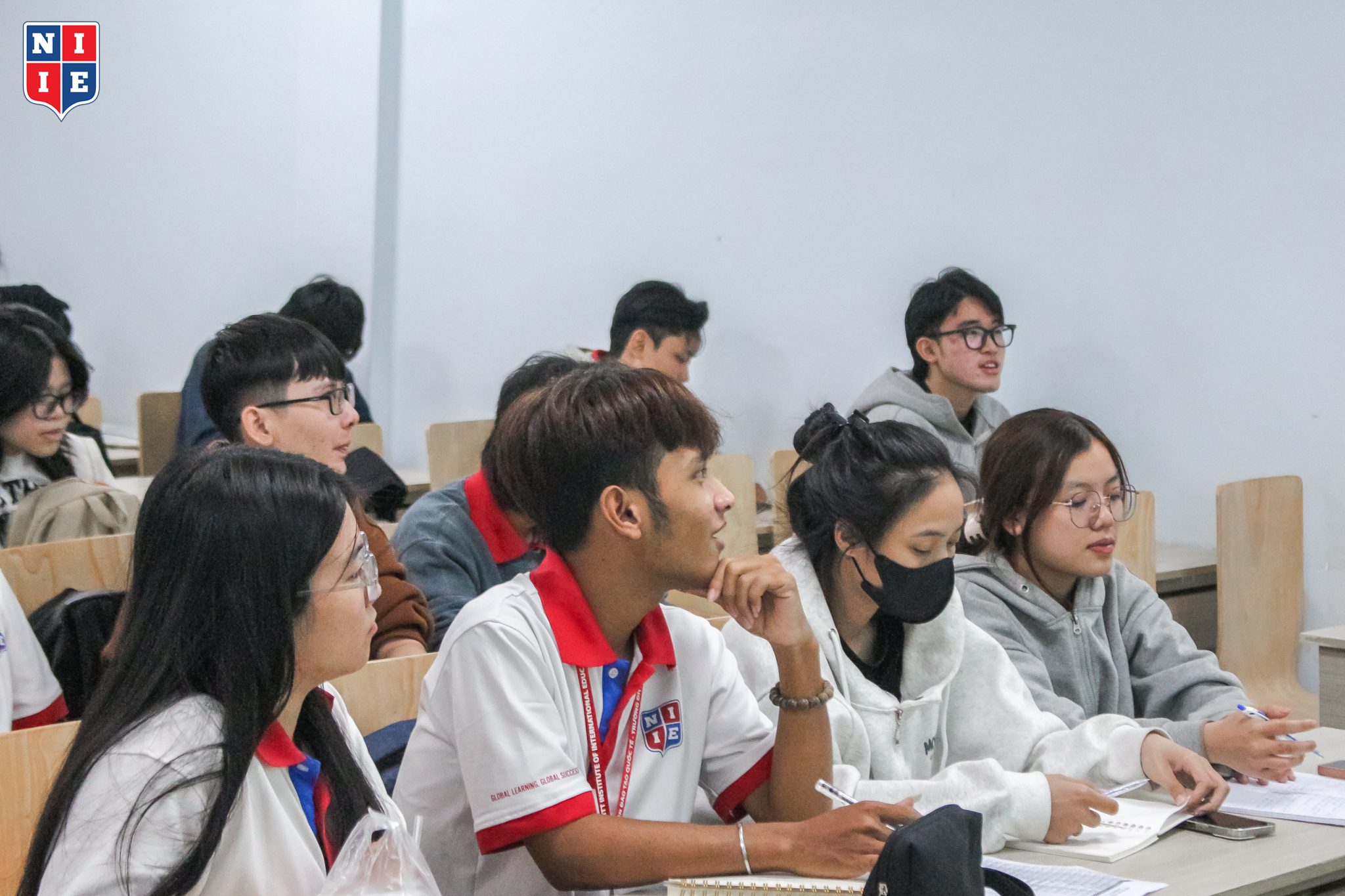
The workshop ended with an engaging Q&A session, where students asked about investment, market fluctuations, and how to develop suitable analytical strategies for different financial goals. Through this activity, NIIE students not only strengthened their knowledge but also developed data analysis and market analysis skills—crucial competencies for their academic journey and future careers.